Contests for Students
The U.S. Institute of Peace (USIP) is committed to educating the next generation of peacebuilders about the U.S. role in preventing and resolving conflicts around the world, and about the important part that young people can play as engaged global citizens.
Starting in 1987, USIP challenged students to think critically about global issues of conflict and peace through the National Peace Essay Contest (NPEC). Now, USIP is building upon the legacy of the NPEC (which was wrapped up in 2014) by partnering with other organizations on a range of initiatives that inspire students to learn more about global peacebuilding and to put their own good ideas into action.
Make sure to explore our other resources for students, teachers, and the broader public by visiting the Public Education section.
Academic WorldQuest
Each year, the World Affairs Councils of America (WACA) engages more than 4,000 high school students across the U.S. in its signature quiz contest that tests their knowledge of global issues and foreign policy in 10 categories. Since 2016, USIP has been a co-sponsor of this national contest, ensuring the inclusion of a peace and conflict category in Academic WorldQuest each year.
For the 2021 competition, USIP’s category is “Exploring Peace in a World of Conflict,” with featured resources that blend research, data, and real-life examples of peacebuilding in action. For more information, check out our Academic WorldQuest page!
National High School Essay Contest
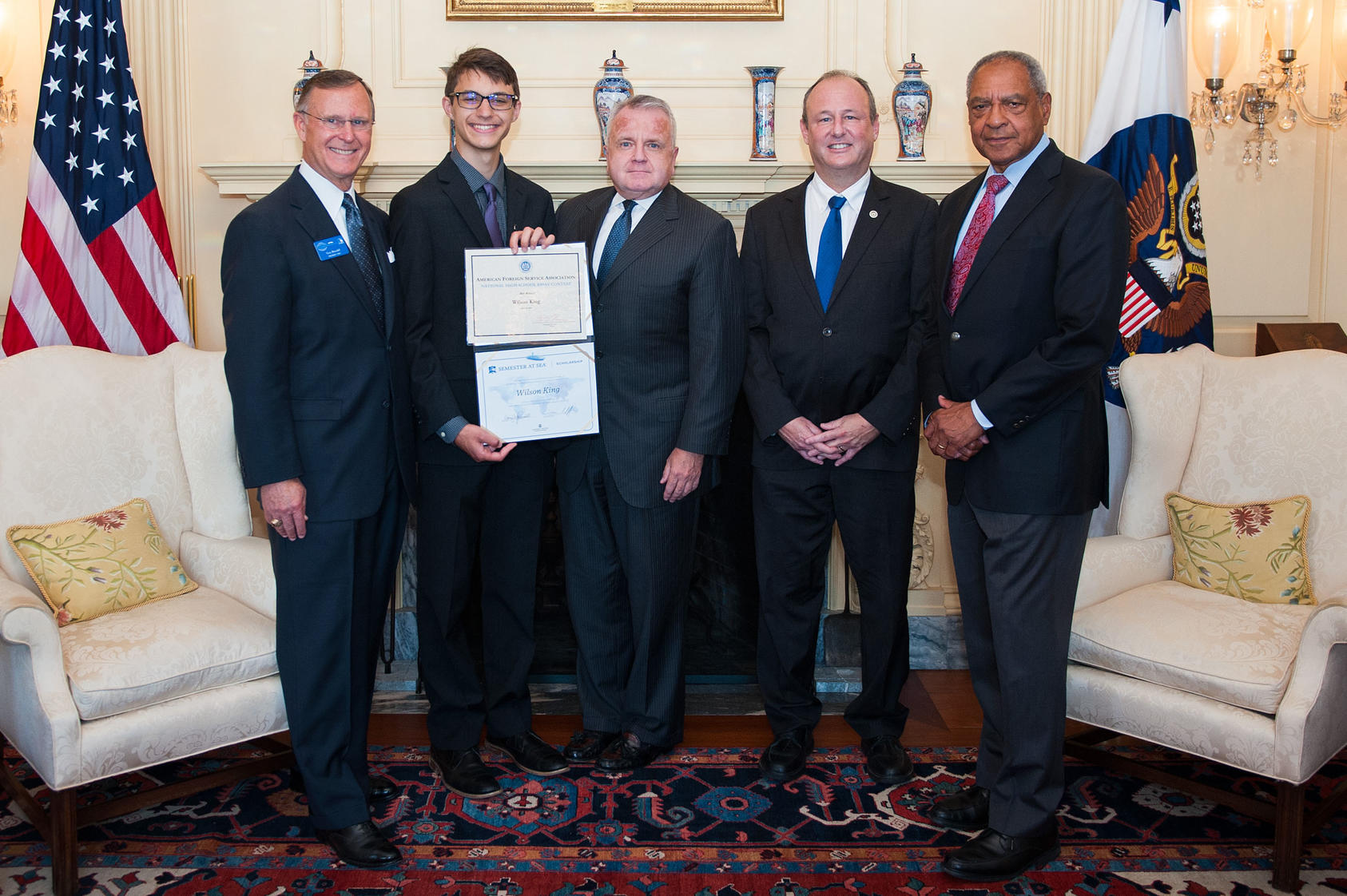
As a successor to USIP’s own National Peace Essay Contest, USIP has since 2015 partnered with the American Foreign Service Association (AFSA) on its annual National High School Essay Contest. The contest engages high school students in learning and writing about issues of peace and conflict, and encourages appreciation for diplomacy’s role in building partnerships that can advance peacebuilding and protect national security.
The winner of the contest receives a $2,500 cash prize, an all-expense paid trip to Washington, D.C. to meet leadership at the U.S. Department of State and USIP, and a full-tuition paid voyage with Semester at Sea upon the student’s enrollment at an accredited university. The runner-up receives a $1,250 cash prize and a full scholarship to participate in the International Diplomacy Program of the National Student Leadership Conference.
Explore the 2022 essay contest topic, “Partnerships for Peace in a Multipolar Era,” download this year’s contest study guide, and learn more about the essay contest here.