The April 2010 elections in Sudan were an important milestone of the Comprehensive Peace Agreement (CPA) signed between the ruling National Congress Party (NCP) and the Southern People's Liberation Movement (SPLM) in 2005. In advance of these elections, USIP’s Center for Conflict Analysis and Prevention and Education and Training Center, International partnered to conduct workshops throughout the country. The workshops included civic education and democracy components, conflict resolution skills training, and case studies and simulations.

The 2010 elections were particularly significant because they were the first to be held throughout Sudan; previous elections largely excluded the south. The April elections also marked the first time the ruling National Congress Party (NCP) was tested in multiparty polls since the end of Sudan’s civil war in 2005.
Conducting the 2010 elections presented significant political and logistical challenges for Sudan. Given the special circumstances of these polls, targeted efforts were recommended to ensure that electoral conflict does not turn violent.
Building on previous work in Nigeria and Cote d’Ivoire, USIP’s Center for Conflict Analysis and Prevention (CAP) and Education and Training Center, International (ETC-I) began organizing a series of electoral violence prevention workshops in Sudan in January 2009. These workshops addressed strategies for managing electoral conflict in Sudan by combining a case-study approach with training modules in conflict resolution and citizenship skills.
EVP Phase I: North/South Workshops
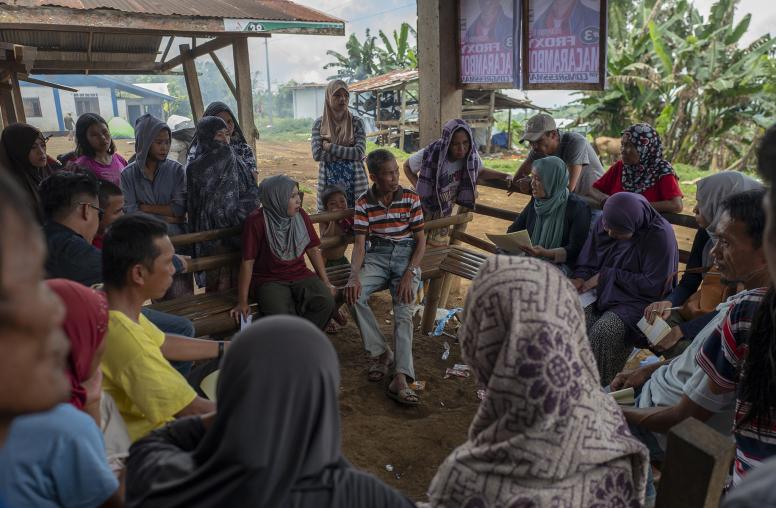
In the first phase of its electoral violence prevention (EVP) work, USIP conducted a series of workshops throughout north and south Sudan with participants who represented various facets of Sudanese society. Participants identified key sources of conflict and triggers of violence in other African elections, in addition to building their capacities in conflict resolution and citizenship skills.
EVP Phase II: Training of Trainers Workshops
The second phase of EVP, launched in November 2009, focused on developing a North/South network of Sudanese trainers to spread the program content more widely and sustainably in the short period of time before the elections. This network was formed with the intention of continuing the peacebuilding work even after the elections, as Sudan continued its political transition.