Twenty Years After Madrid
Lessons Learned and the Way Forward for Arab-Israeli Peacemaking
On November 2, 2011, the United States Institute of Peace and the James A. Baker III Institute for Public Policy co-hosted a full-day conference to explore lessons learned at the Madrid Conference of 1991 and the way forward for Arab-Israeli peacemaking. The conference was composed of a keynote speech by former Secretary of State James A. Baker, III, a plenary session, seven panels addressing various aspects of the conflict and the role of the United States, and a closing discussion with two former National Security Advisors that explored challenges facing the United States and Arab-Israeli peacemaking.
The Madrid Peace Conference was a watershed moment for American diplomacy, but the two decades since have witnessed a region facing substantial challenges and instability, with major uncertainty regarding the future of efforts toward peace. With the recent developments at the United Nations and the Quartet's latest proposal, this conference pulled lessons from the past, assessed the current state-of-play, and explored new ideas for moving forward.\
Event Recap
Agenda, Summaries
Opening Session
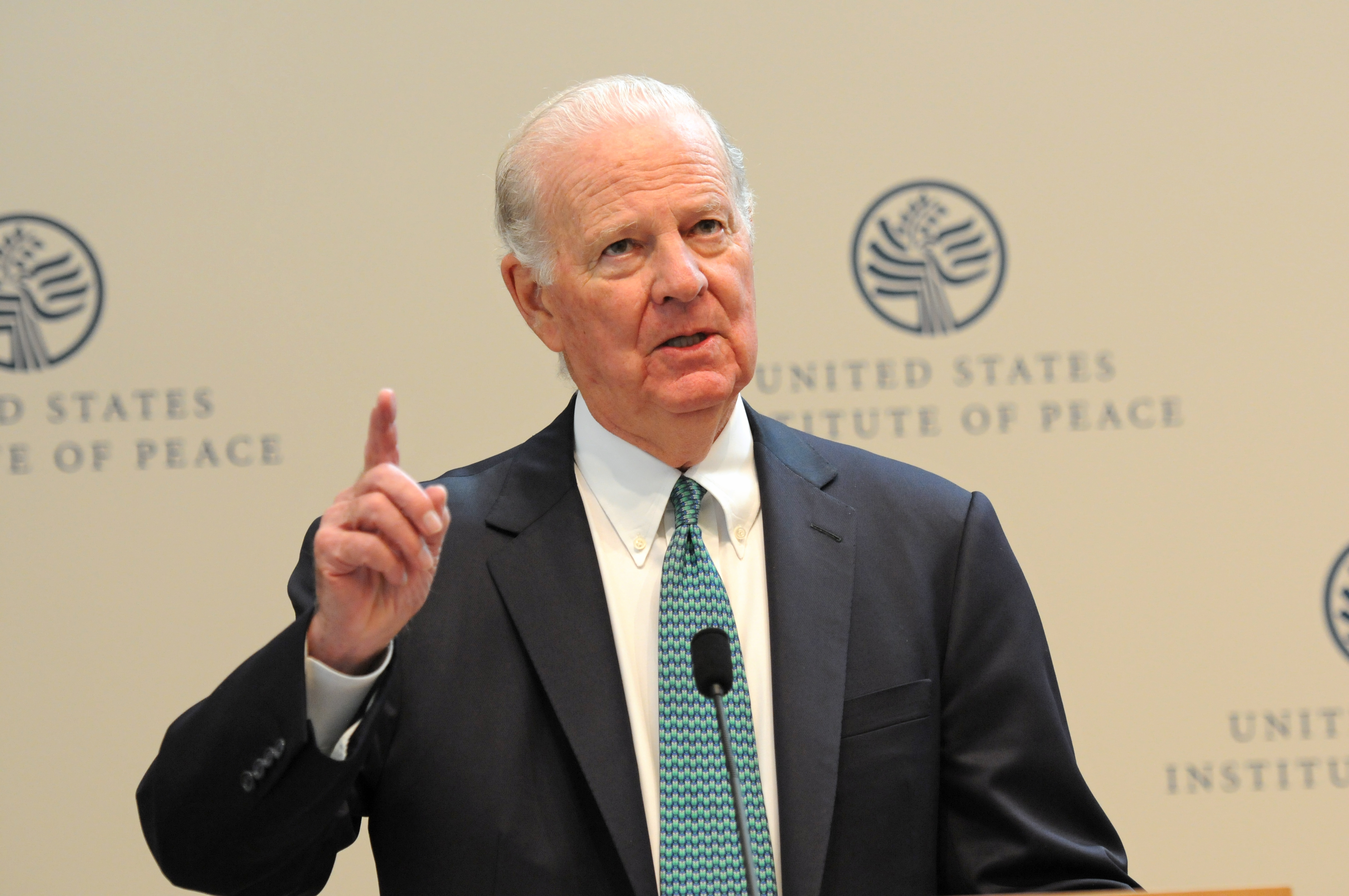
USIP President Dr. Richard Solomon and Ambassador Edward Djerejian, founding director of the James A. Baker III Institute for Public Policy, opened the conference with speeches that welcomed those in attendance to USIP's new building on the National Mall and that set the scene for the day’s proceedings. President Bush's video address (Baker Institute) looked back on the Madrid process while Secretary of State James A. Baker III reflected on the lessons learned at the Madrid Conference and the way forward for Arab-Israeli peacemaking and the United States.
Speakers
Dr. Richard Solomon
President, USIP; former Director of Policy Planning and Assistant Secretary for East Asian and Pacific Affairs, U.S. Department of State
Ambassador Edward Djerejian
Founding Director, James A. Baker III Institute for Public Policy; former U.S. Ambassador to Syria and Israel, former Assistant Secretary of State for Near East Affairs, U.S. Department of State
Former President George H.W. Bush (via video address)
The Honorable James A. Baker, III (Keynote)
Former United States Secretary of State
Read the Secretary's remarks as prepared
Plenary Session: Lessons from Madrid and the Way Forward for Arab-Israeli Peacemaking
This panel, composed of veteran Middle East diplomats and negotiators discussed the major contributions of Madrid to Arab-Israeli peacemaking; highlighted lessons to be learned from the model of direct face-to-face negotiations reinforced by a multilateral track; and proposed structures and avenues for future negotiations.
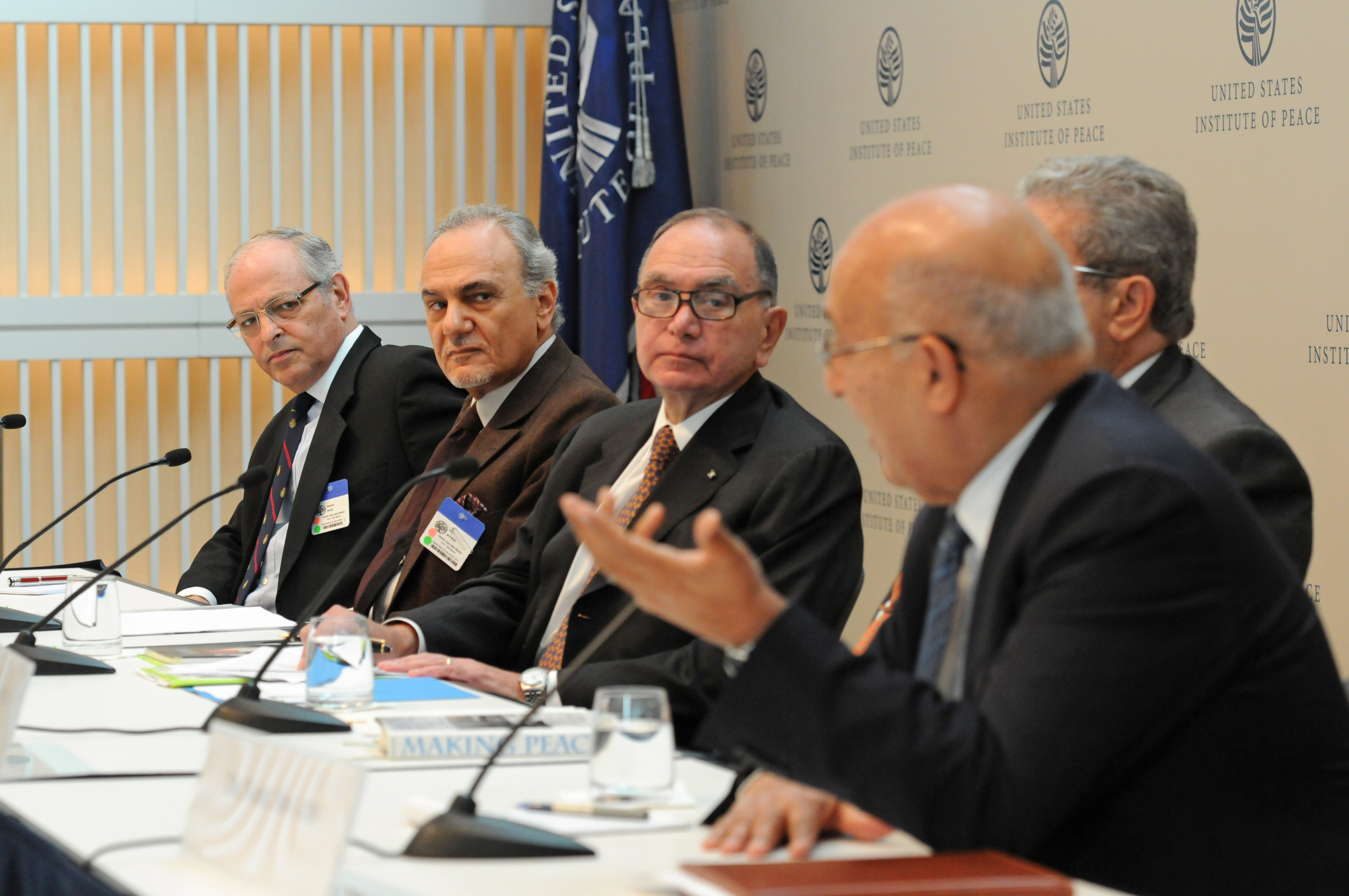
Speakers
Moderated by Ambassador Edward Djerejian, James A. Baker III Institute for Public Policy
His Royal Highness Prince Turki al-Faisal
Former Saudi Head of Intelligence and Ambassador to the United States
His Excellency Eytan Ben-Tsurbush
Former Director General, Israeli Ministry of Foreign Affairs
Dr. Nimrod Novik
Former Israeli Peace Negotiator, leading businessman
Nabil Sha'ath
Former Palestinian Chief Negotiator; International Co-operation Minister, Palestinian National Authority
Lunch Panel: Getting to Madrid: Personal Reflections
The Twenty Years After Madrid lunch featured four members of the American team present at the Madrid Conference who reflected on their experiences planning and executing the conference in 1991.
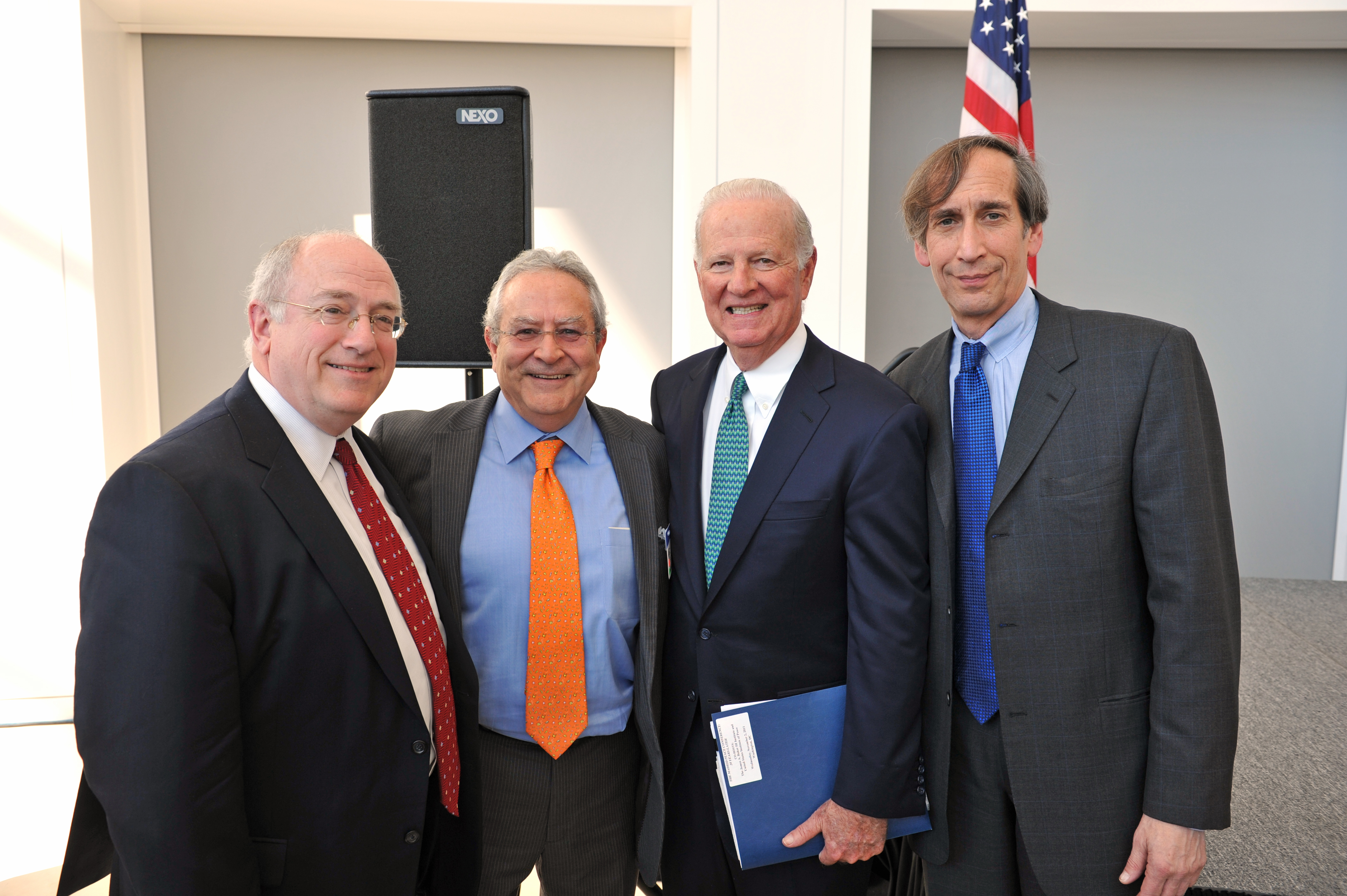
Speakers:
Gamal Helal
Founder, Helal Enterprises; former translator and advisor to Presidents George H.W. Bush, Bill Clinton, and George W. Bush
Ambassador Dan Kurtzer
S. Daniel Abraham Professor in Middle Eastern Policy Studies, Princeton University; senior member of the U.S. delegation to the Madrid Conference; former U.S. Ambassador to Egypt and Israel; co-author of the forthcoming book, "The Peace Puzzle: America's Quest for Arab-Israeli Peace" (forthcoming 2012)
Ambassador Sam Lewis
Former United States Ambassador to Israel; former director of State Department Policy Planning Staff; former USIP President
Dr. Aaron David Miller
Public Policy Scholar, Woodrow Wilson International Center for Scholars; senior member of the U.S. delegation to the Madrid Conference; former Advisor to Republican and Democratic U.S. Secretaries of State
Panel I: Mapping Peace Between Israelis and Palestinians: Borders and Security; Sovereignty and Recognition
This panel of experts and former advisors explored the assumed outline of a future peace agreement and the impact that time and circumstances on the ground has had on these assumptions over the years. Additionally, the panelists discussed the implications of the Palestinian bid for statehood at the United Nations.
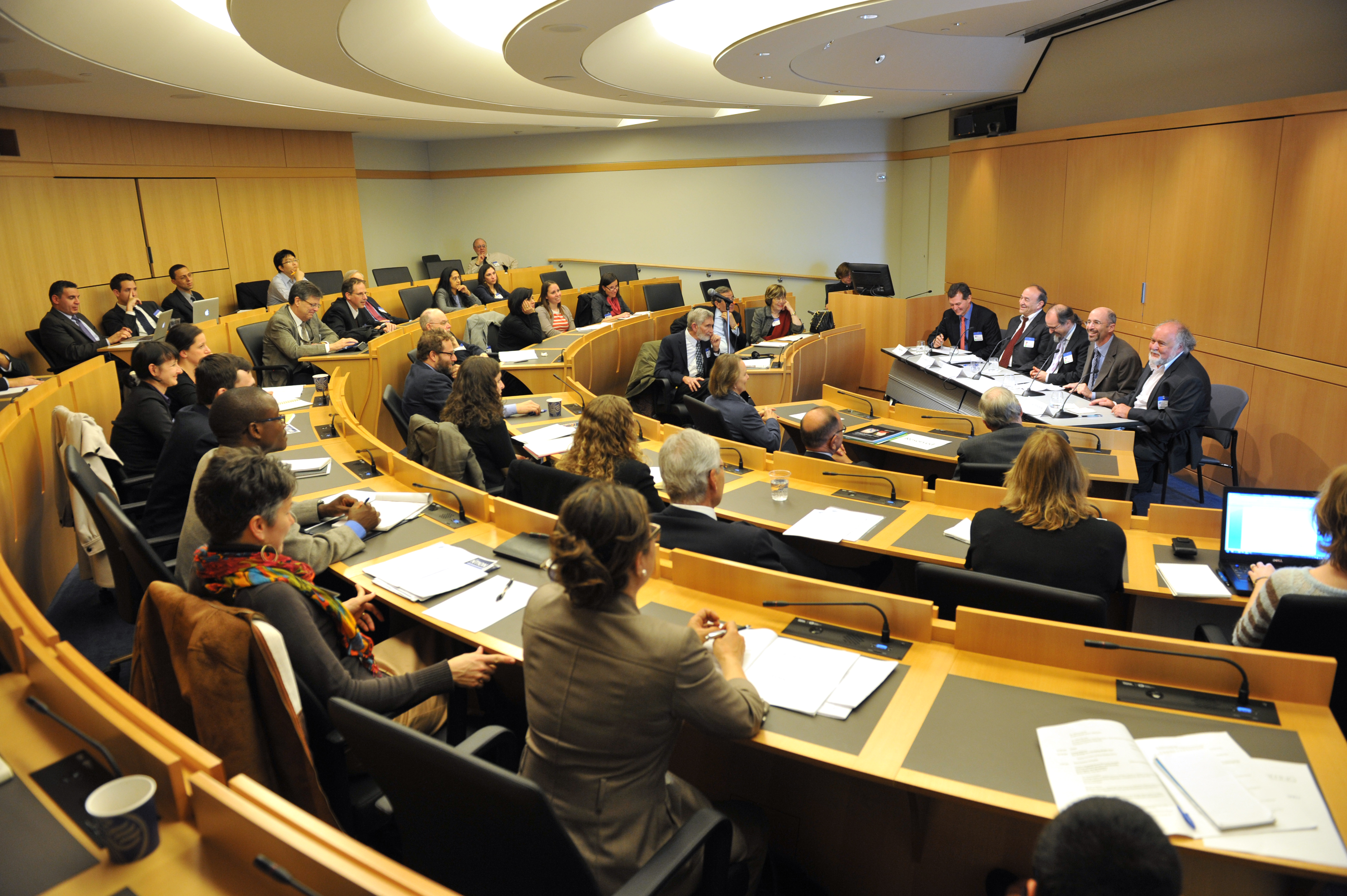
Speakers:
Moderated by Greg Myre, NPR
Dr. Samih al-Abed
Sabbagh Fellow in Middle Eastern Studies, James A. Baker III Institute; former Palestinian Peace Negotiator, consultant for the Palestine Investment Fund
Ghaith al-Omari
Executive Director, American Task Force on Palestine; former Advisor to the Palestinian Negotiating Team, Advisor to the Palestinian Prime Minister
Dr. Yair Hirschfeld
Rabin Fellow for Peace and Security in the Middle East, James A. Baker III Institute; Economic Cooperation Foundation, Executive Director; Co-creator of the "Oslo channel"
Robert Malley
Program Director for Middle East and North Africa, International Crisis Group; former Middle East Advisor to President Bill Clinton
Panel II: Economy of Peace: The Impacts of Private Investment, Development Aid, and Economic Reforms on Arab-Israeli Peacemaking
For this panel, the below group of experts examined the role of economic reforms in moderating political tensions in the West Bank and discussed what needs to be done to ensure the institution building process continues. They also discussed progress in the West Bank as compared to the situation in Gaza and whether there are better practices that international donors could employ on the ground in the West Bank.
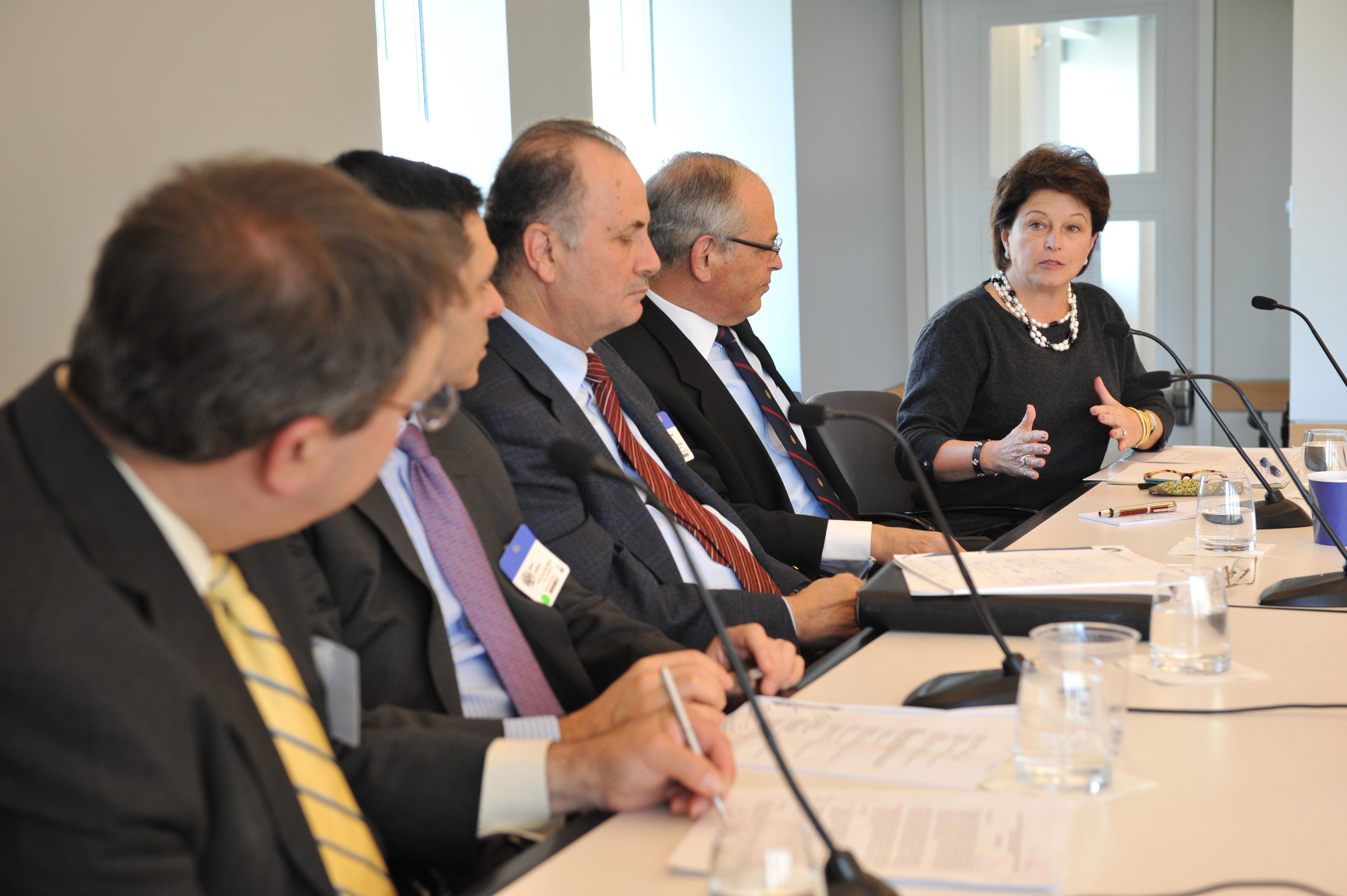
Speakers
Moderated by David Sanger, New York Times and USIP Writer-in-Residence
Daniel Lubetzky
Founder and Chairman, Peace Works; leading social entrepreneur
Dr. Mohammad Mustafa
Chairman and CEO, The Palestine Investment Fund (PIF)
Dr. Nimrod Novik
Chairman, Economic Cooperation Foundation
Toni Verstandig
Executive Vice President, S. Daniel Abraham Center for Middle East Peace
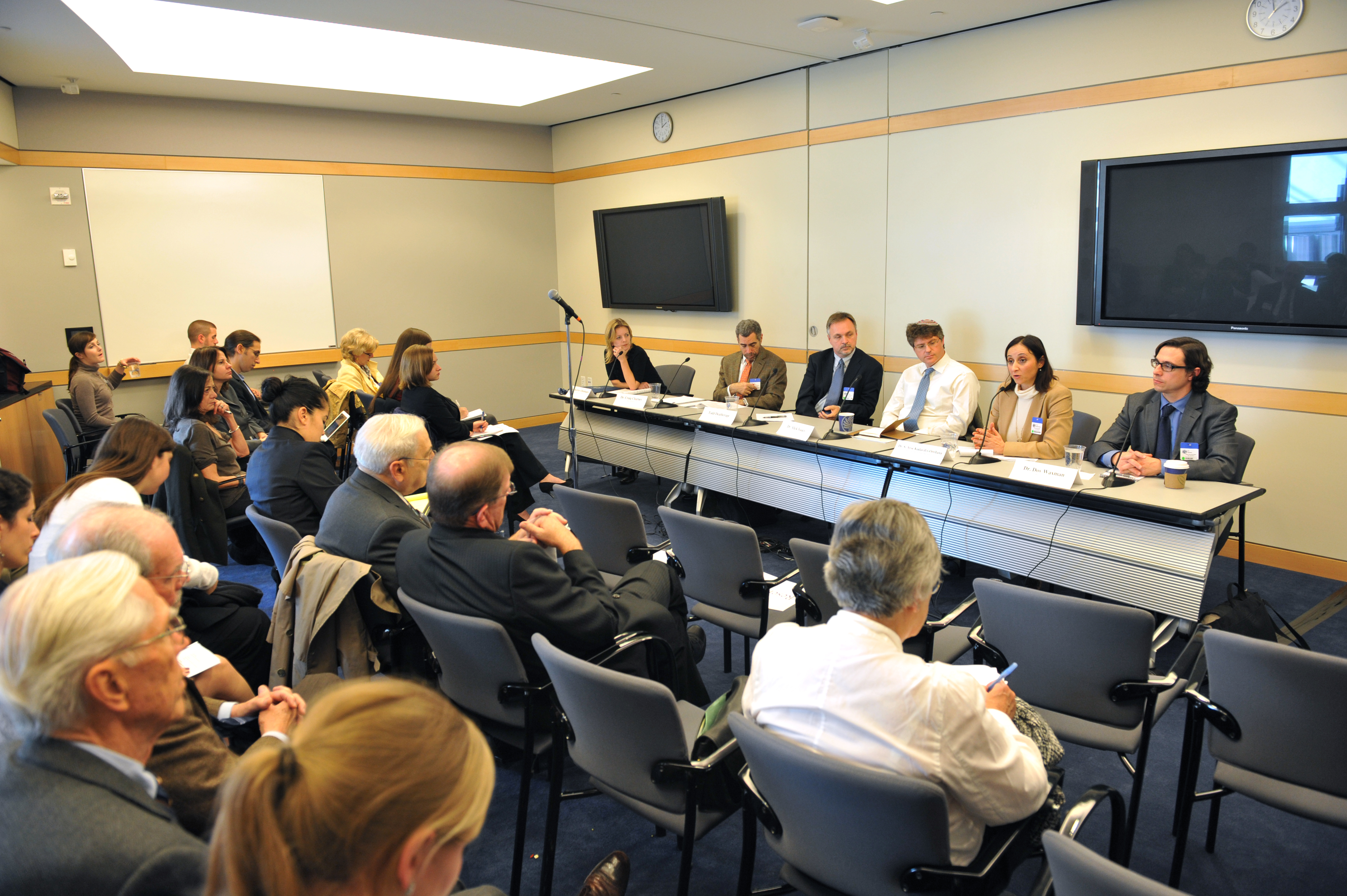
Panel III: Identity Politics, Public Opinion, and the Peace Process: The Challenges and Opportunities for Bringing Publics on Board
This panel explored the impact of regional and external identity politics on the peace process and the challenges of bringing publics on board. Topics discussed included the role of religion and religious identity on Israeli and Palestinian political dynamics, challenges to the notion of religion as a necessary “spoiler,” internal divisions within Israeli and Palestinian societies, and the of shifting trends of regional public opinion.
Speakers
Moderated by Lucy Kurtzer-Ellenbogen, USIP
Dr. Craig Charney
President, Charney Research
Todd Deatherage
Executive Director and Co-Founder, Telos Group; former senior Senate staffer and State Department Official
Dr. Alick Isaacs
Co-Director, Talking Peace Project; author of the newly released "A Prophetic Peace" (Indiana University Press, 2011)
Dr. S. Ayse Kadayifci-Orellana
Georgetown University; leading expert on religion and conflict resolution
Dr. Dov Waxman
Baruch College; co-author of the newly released "Israel's Palestinians: The Conflict Within" (Cambridge, 2011)
Panel IV: The Impact of U.S. Diplomacy Since Madrid
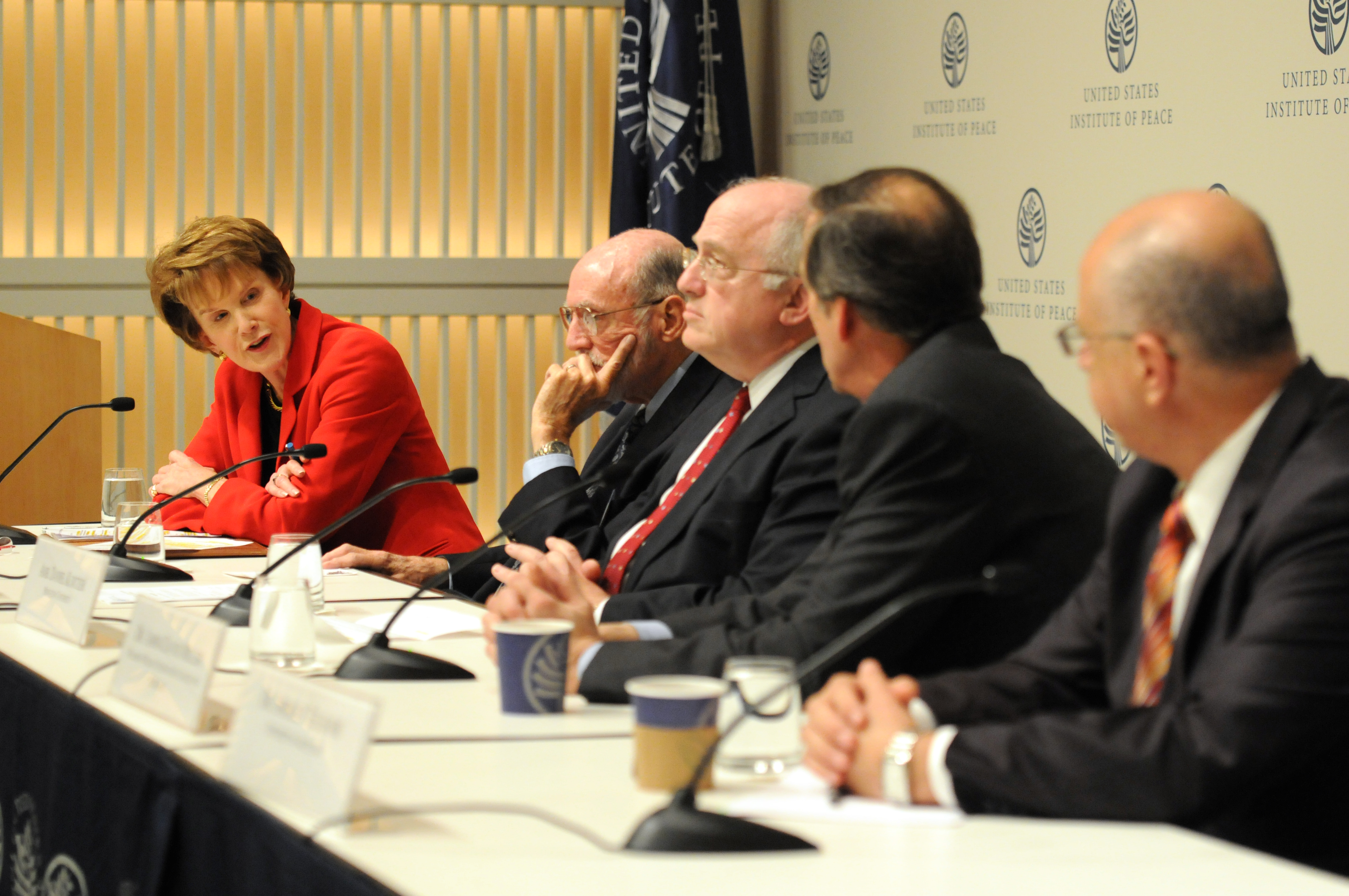
These former diplomats and experts discussed the effectiveness of U.S. diplomacy since the Madrid Conference. Topics included the question of whether the conditions are "ripe" for progress and whether that is the right benchmark for moving ahead; the expectations Arab countries have of both the United States and Israel and how the Arab Spring will impact these expectations; and the current dynamics of the relationship between the United States and Israel.
Listen to the panel discussion
Speakers
Moderated by Margaret Warner, PBS
Ambassador Dan Kurtzer
S. Daniel Abraham Professor in Middle Eastern Policy Studies, Princeton University; senior member of the U.S. delegation to the Madrid Conference; former U.S. Ambassador to Egypt and Israel; co-author of the forthcoming book, "The Peace Puzzle: America's Quest for Arab-Israeli Peace" (forthcoming 2012)
Ambassador Sam Lewis
Former United States Ambassador to Israel; former director of State Department Policy Planning Staff; former USIP President
Dr. Aaron David Miller
Public Policy Scholar, Woodrow Wilson International Center for Scholars; senior member of the U.S. delegation to the Madrid Conference; former Advisor to Republican and Democratic U.S. Secretaries of State
Dr. Shibley Telhami
Anwar Sadat Professor for Peace and Development, University of Maryland; co-author of the forthcoming book, "The Peace Puzzle: America's Quest for Arab-Israeli Peace" (forthcoming 2012)
Panel V: Arab World Transitions: The Impact on the Arab-Israeli Conflict and Prospects for Peace
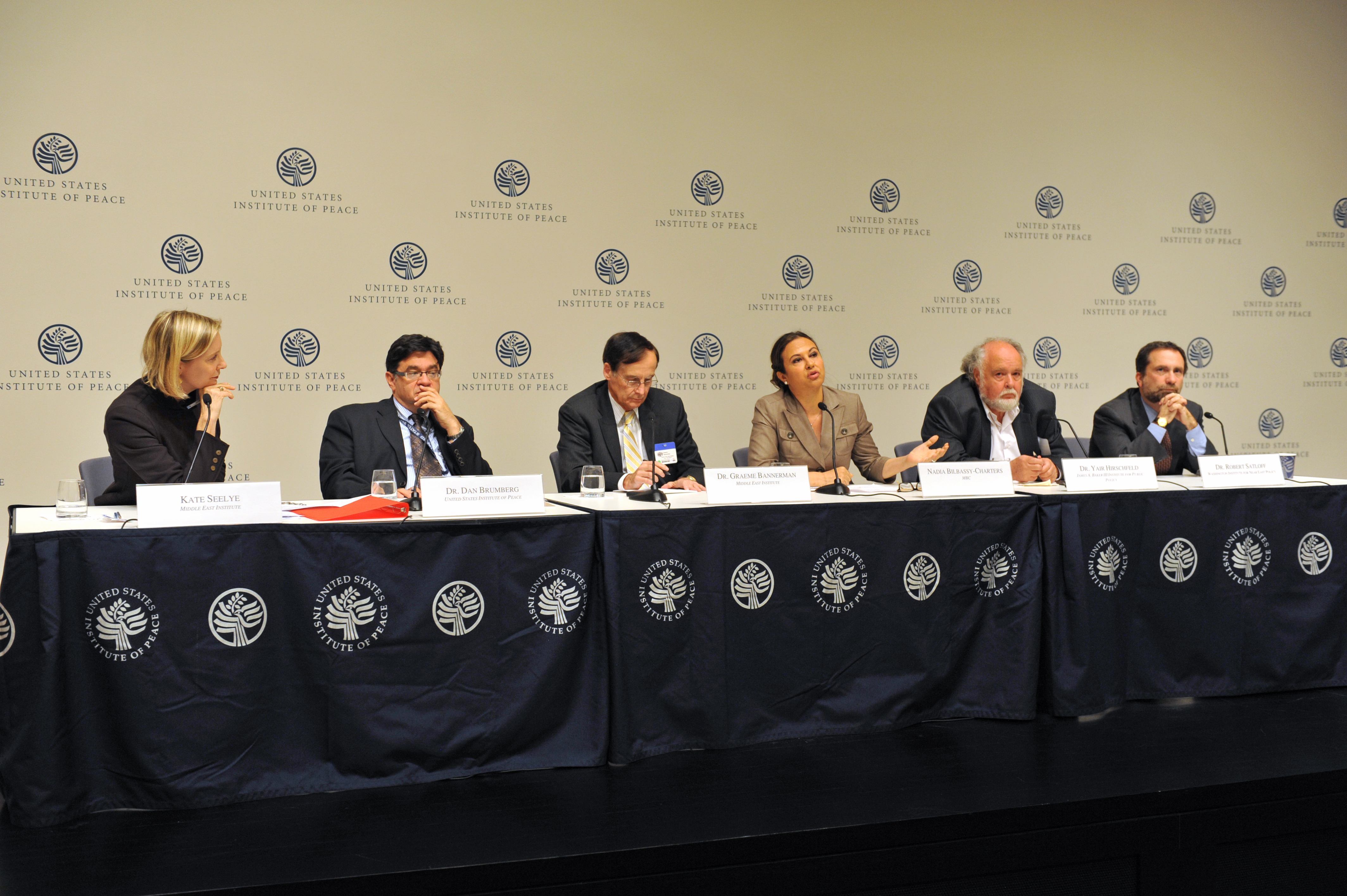
The popular uprisings that began sweeping through the Arab world earlier this year will have significant implications for peacemaking between Arab countries and Israel. This panel explored the challenges and opportunities the parties are now faced with, as well as whether the shifting regional climate will make peace agreements between Israel and its Arab neighbors more or less likely.
Speakers
Moderated by Kate Seelye, Middle East Institute
Dr. Graeme Bannerman
Scholar, Middle East Institute
Nadia Bilbassy-Charters
Senior Correspondent, MBC
Dr. Daniel Brumberg
Senior Adviser, USIP
Dr. Robert Satloff
Executive Director, Washington Institute for Near East Policy; leading expert on Arab politics and U.S. diplomacy in the Middle East
Dr. Yair Hirschfeld
Rabin Fellow for Peace and Security in the Middle East, James A. Baker III Institute; Economic Cooperation Foundation, Executive Director; co-creator of the "Oslo channel"
Panel VI: Uprising in Syria: How will it End and What Does it Mean for Middle East Peace?
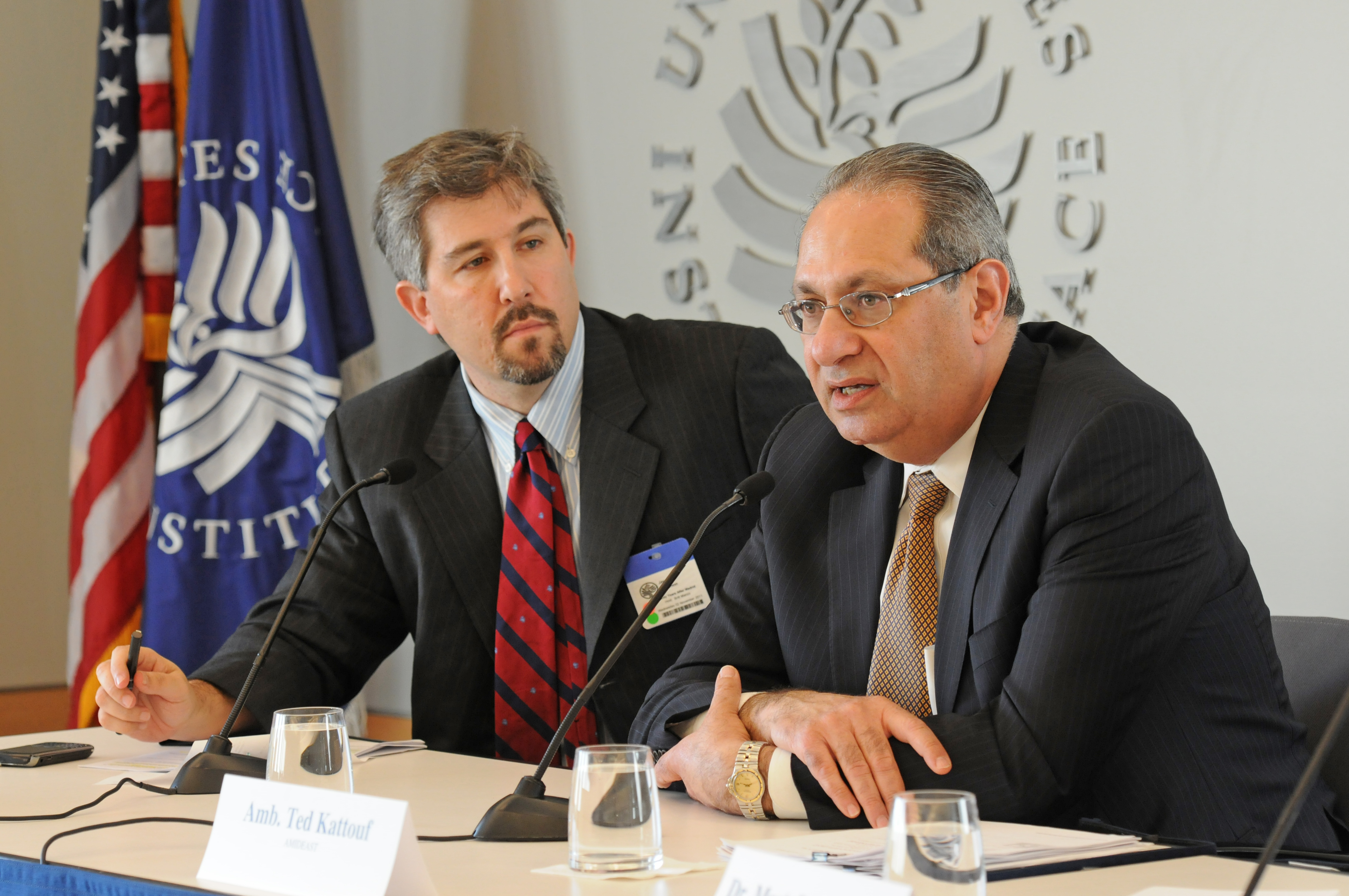
The question of Syria’s future looms large for policymakers and analysts concerned with the outlook of Arab-Israeli peacemaking. This panel of experts addressed the current uncertainty in Syria, potential outcomes and the implications for the regional environment.
Speakers
Moderated by Jay Solomon, Wall Street Journal
Ambassador Ted Kattouf
President, AMIDEAST; former U.S. Ambassador to Syria
Mike Singh
Managing Director, Washington Institute for Near East Policy; former Senior Director for Middle East Affairs, National Security Council
Mona Yacoubian
The Stimson Center; leading expert on Lebanon; former State Department analyst
Panel VII: Security and Peace: What Can be Done to Overcome Spoilers and Prevent Violence?
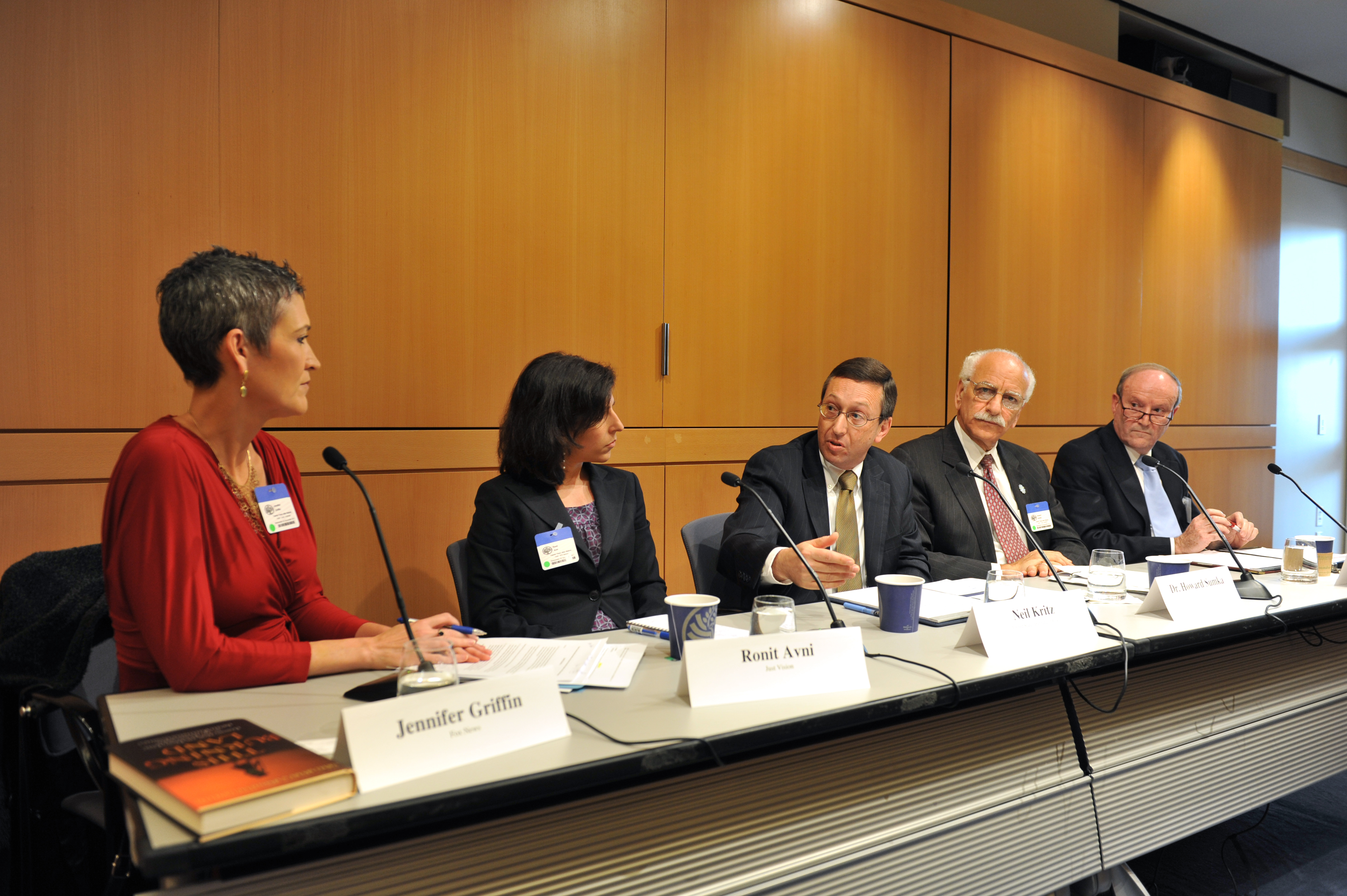
Questions of security are central to the question of peacemaking in the Arab-Israeli context. This panel explored critical questions such as Israeli-Palestinian security cooperation and the necessary conditions for its continued success; the future of the Palestinian nonviolence movement and the role for civil society in fostering calm on the ground; and Israeli options for stemming the growing violence being perpetrated by settlers.
Speakers
Moderated by Jennifer Griffin, Fox News
Ronit Avni, Just Vision, Founder
Producer of the award-winning film Budrus
Neil Kritz
Senior Scholar-in-Residence, USIP; Advisor to the Office of the Quartet Representative in Jerusalem, leading expert on the Palestinian justice system
Dr. Howard Sumka
CEO, OneVoice; former USAID West Bank/Gaza Mission Director
Dr. Yoram Peri
Abraham S. and Jack Kay Chair in Israel Studies, University of Maryland; Director of the Joseph and Alma Gildenhorn Institute for Israel Studies
Concluding Session: Arab-Israeli Peacemaking and a Changing Middle East: Questions for the United States
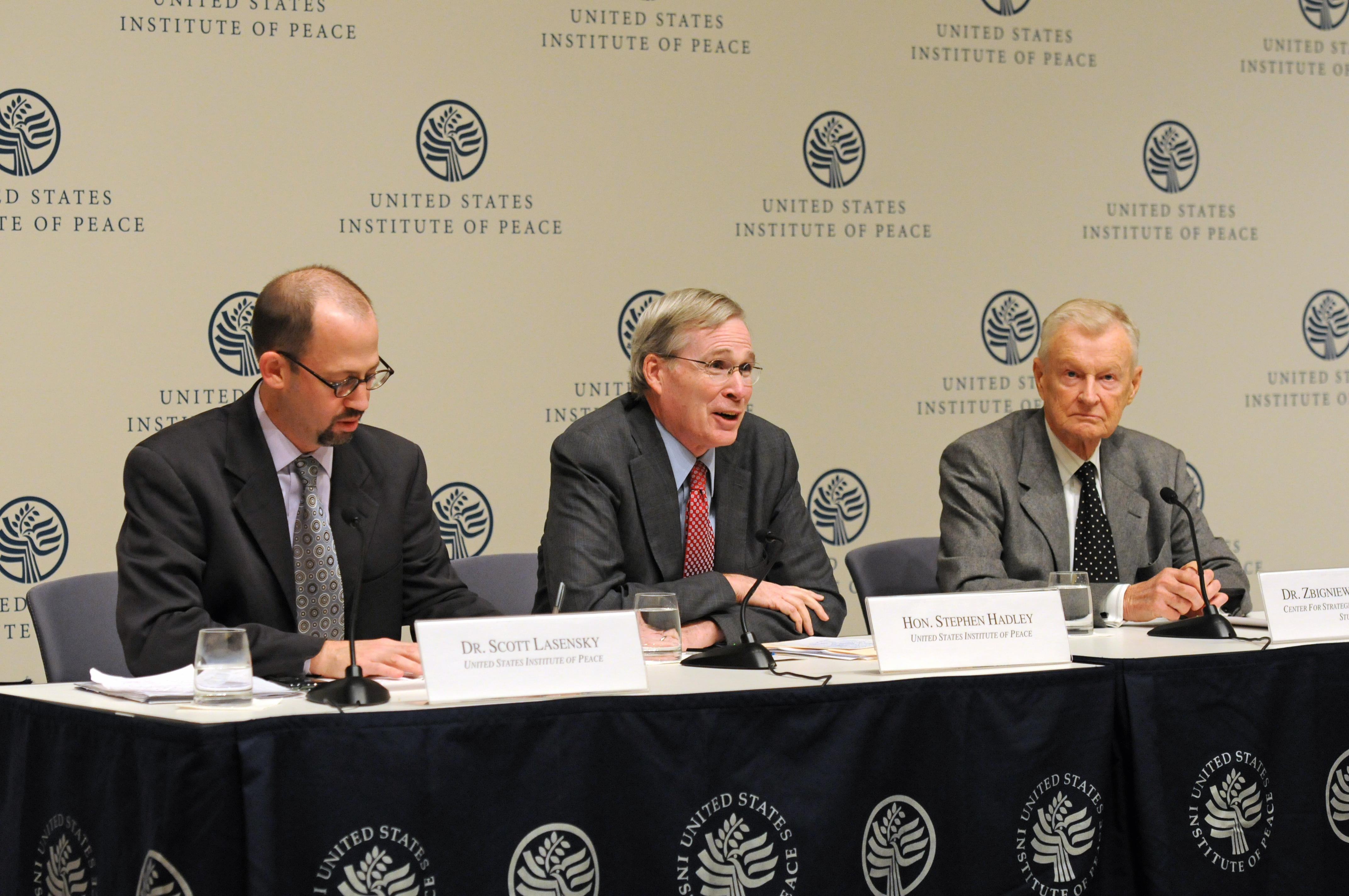
In the closing session of the Twenty Years After Madrid conference, former National Security Advisors Zbigniew Brzezinski and Stephen Hadley discussed the current foreign policy challenges the United States faces in addressing the Arab-Israeli conflict and their views of the road ahead.
Speakers
Moderated by Dr. Scott Lasensky, USIP
Dr. Zbigniew Brzezinski
Counselor and Trustee, Center for Strategic and International Studies; former National Security Advisor
Stephen Hadley
Senior Advisor for International Affairs, USIP; former National Security Advisor
Conference Planning
Co-chairs:
- Dr. Richard H. Solomon, USIP
- Ambassador Edward Djerejian, James A. Baker III Institute for Public Policy
Co-directors:
- Paul Hughes, USIP
- Neil Kritz, USIP
- Lucy Kurtzer-Ellenbogen, USIP
- Scott Lasensky, USIP
Conference Coordinators:
- Lena Andrews, USIP
- Matt Chen, James A. Baker III Institute for Public Policy
- Britt Manzo, USIP
The Day in Videos